


Ozempic, Wegovy, Zepbound: What’s the Difference (and Does It Matter)?
If you have been trying to understand the difference between Ozempic, Wegovy, and Zepbound, you are not alone. As a matter of fact, I get asked this question almost every day. These names get used interchangeably online, often incorrectly, and usually without context.
One person says Zepbound is “stronger.”
Another says Ozempic worked until it did not.
Someone else insists Wegovy is the same thing but more expensive.
There is truth mixed into all of that, and also a lot of misunderstanding.
This post breaks down what actually differs between these medications, what is mostly branding, and when those differences genuinely matter.
Semaglutide vs Tirzepatide: The Real Physiological Difference
At the core, this conversation is not about brand names. It is about the mechanism of action.
Semaglutide: GLP-1 Receptor Agonist
Semaglutide is the active medication in both Ozempic and Wegovy. It is a GLP-1 receptor agonist, meaning it works by activating the glucagon-like peptide-1 pathway.
This results in:
- Increased satiety signaling in the brain
- Slowed gastric emptying
- Improved insulin sensitivity and post-meal blood sugar regulation
“Weight loss with semaglutide is driven primarily by appetite regulation and metabolic effects mediated through GLP-1 pathways.”
Tirzepatide: Dual GIP and GLP-1 Agonist
Tirzepatide, the medication in Zepbound, activates two incretin receptors:
- GLP-1
- GIP (glucose-dependent insulinotropic polypeptide)
GIP appears to further enhance insulin sensitivity and may amplify appetite regulation when combined with GLP-1. This dual mechanism likely explains why tirzepatide produces greater average weight loss compared to GLP-1–only medications in clinical trials.
“More receptors activated does not automatically mean better for every person. It means different.”
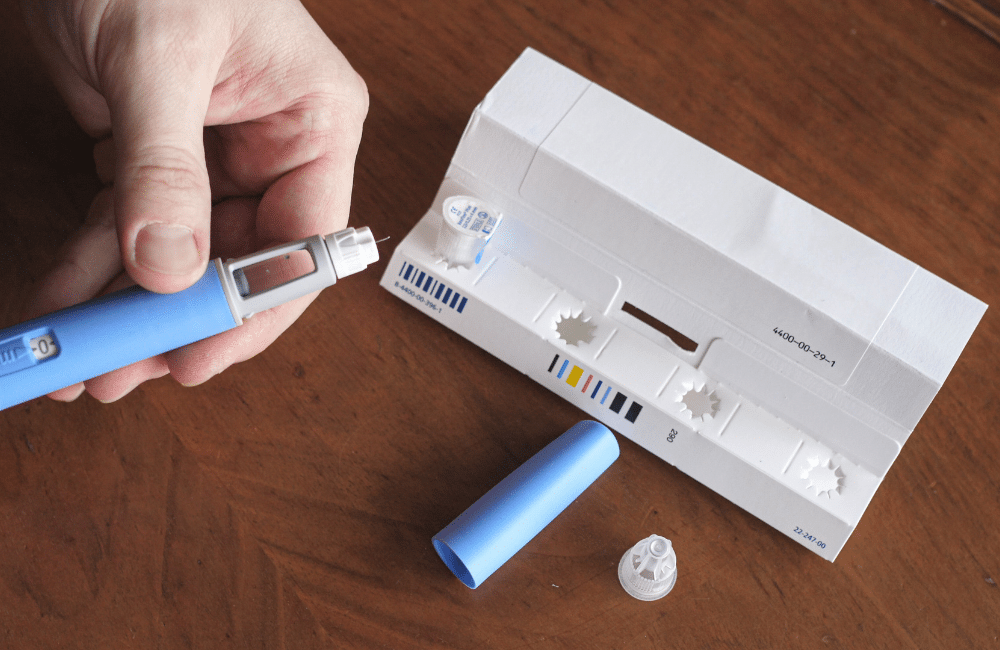
Our Approach to Weight Loss Medications
At Whole Lifecycle Nutrition, we take a non-restrictive, physiology-first approach to health. We do not view weight loss medications as a default solution or a substitute for nutrition, movement, or care. These medications may be appropriate in specific medical contexts, but they also carry real risks and tradeoffs.
Our goal in this series is not to persuade anyone to use medication, but to help readers understand when they may help, when they may harm, and when they are simply not the right tool.
Ozempic vs Wegovy: Same Medication, Different Indication
This is where confusion often starts.
Ozempic
- Active medication: semaglutide
- FDA-approved for type 2 diabetes
- Maximum dose of 2.0 mg once weekly
Wegovy
- Active medication: semaglutide
- FDA-approved for chronic weight management
- Target maintenance dose of 2.4 mg once weekly
- If 2.4 mg is not tolerated, 1.7 mg weekly may be used as a maintenance dose
They contain the same active ingredient. The difference is indication and dosing strategy, not formulation.
The clinically meaningful distinction is not simply that Wegovy has a slightly higher dose. It is that Wegovy’s dosing was studied, titrated, and approved specifically for weight management, while Ozempic’s dosing was optimized for glycemic control in diabetes.
Prescribing Ozempic for weight loss is considered off-label, which is legal and common, but different from FDA indication.

Zepbound vs Wegovy: Different Medications, Different Physiology
This comparison is more physiologically meaningful.
Wegovy
- GLP-1 receptor agonist only
- Average weight loss of approximately 13–15% in clinical trials
- In head-to-head comparison, semaglutide achieved 13.7% mean weight loss at 72 weeks
- Often better tolerated for some individuals
Zepbound
- Dual GIP and GLP-1 receptor agonist
- Average weight loss of 15–21%, depending on dose
- 5 mg: ~15%
- 10 mg: ~19.5%
- 15 mg: ~21%
- 5 mg: ~15%
- In head-to-head comparison, tirzepatide achieved 20.2% mean weight loss at 72 weeks
This does not mean Zepbound is universally superior. It means it works through an additional hormonal pathway that may be more effective for some bodies and less tolerable for others.
FDA Indications vs Off-Label Use
Understanding what is FDA-approved versus commonly prescribed helps clarify access and expectations.
Currently:
- Wegovy is FDA-approved for chronic weight management
- Zepbound is FDA-approved for chronic weight management in adults with obesity or overweight plus at least one weight-related condition
- Ozempic is FDA-approved for type 2 diabetes, not obesity
From a patient perspective, FDA indication can affect insurance coverage, cost, and availability. From a physiological perspective, the medication behaves the same regardless of label.
Dosing Differences and Why They Matter
Dose matters more than branding.
Semaglutide
- Ozempic: titrated up to 2.0 mg weekly
- Wegovy: titrated up to 2.4 mg weekly
The difference between 2.0 mg and 2.4 mg is modest. The more relevant distinction is how the dosing was studied and what outcomes it was designed to support.
Tirzepatide (Zepbound)
- Available doses: 2.5 mg, 5 mg, 7.5 mg, 10 mg, 12.5 mg, 15 mg
- Starting dose: 2.5 mg weekly
- Titrated in 2.5 mg increments every 4 weeks
- Maintenance doses: 5 mg, 10 mg, or 15 mg weekly
Higher doses tend to produce greater weight loss, but also increase the likelihood of gastrointestinal side effects and excessive appetite suppression. Which brings us to an important point….
Why “Stronger” Is Not Always Better
Online, Zepbound is often described as stronger.
What that usually means is greater average weight loss in trials.
What it does not mean is better tolerance, better nutrition status, or better long-term outcomes for every individual.
Excessive appetite suppression can increase the risk of:
- Inadequate protein intake
- Micronutrient deficiencies
- Excess lean muscle loss
- Fatigue, dizziness, and poor exercise tolerance
“More appetite suppression without adequate nutritional support is not a win.”

Who Might Respond Better to Each Class
There is no universal rule, but clinical patterns exist.
Semaglutide May Be a Better Fit For:
- Individuals sensitive to gastrointestinal side effects
- Those needing moderate appetite regulation rather than maximal suppression
- People prioritizing long-term tolerance and sustainability
Tirzepatide May Be a Better Fit For:
- Individuals with significant insulin resistance
- Those who did not respond adequately to GLP-1 therapy alone
- People who tolerate incretin-based medications well
“Response is highly individual. Two people on the same medication can have very different experiences.”
Comparison Table: Ozempic vs Wegovy vs Zepbound
| Feature | Ozempic | Wegovy | Zepbound |
| Active medication | Semaglutide | Semaglutide | Tirzepatide |
| Drug class | GLP-1 receptor agonist | GLP-1 receptor agonist | Dual GIP + GLP-1 receptor agonist |
| FDA-approved use | Type 2 diabetes | Chronic weight management | Chronic weight management |
| Off-label use | Weight loss | Rare | Rare |
| Starting dose | 0.25 mg weekly (titration) | 0.25 mg weekly (titration) | 2.5 mg weekly (titration) |
| Dose titration | Gradual increase every 4 weeks | Gradual increase every 4 weeks | Increase by 2.5 mg every 4 weeks |
| Target maintenance dose | Up to 2.0 mg weekly | 2.4 mg weekly (or 1.7 mg if not tolerated) | 5 mg, 10 mg, or 15 mg weekly |
| Appetite suppression | Moderate | Strong | Often very strong |
| Blood sugar effects | Significant | Significant | Very significant |
| Average weight loss (clinical trials) | Not studied for obesity indication | ~13–15% (13.7% in head-to-head trial) | ~15–21% depending on dose |
| Dose-specific weight loss data | N/A | STEP trials ~15% | 5 mg: ~15% | 10 mg: ~19.5% | 15 mg: ~21% |
| Head-to-head trial outcome | N/A | 13.7% at 72 weeks | 20.2% at 72 weeks (SURMOUNT-5) |
| GI side effects | Common, dose-dependent | Common, dose-dependent | Common, may be more pronounced |
| Who may respond best | Those prioritizing tolerance | Those seeking GLP-1–based weight loss | Those with insulin resistance or inadequate GLP-1 response |
| Key limitation | Not FDA-approved for obesity | Tolerance at higher doses varies | Greater appetite suppression may increase under-eating risk |
The Takeaway
Ozempic, Wegovy, and Zepbound are not interchangeable names for the same thing, but they are also not radically different miracle solutions.
The meaningful differences come down to:
- Mechanism of action
- Dosing strategy
- Individual metabolic response
The most important factor is not which medication is considered stronger. It is whether the medication is paired with nutrition, muscle preservation, and long-term metabolic support.
“Medication choice should be individualized, not trend-driven.”
Up next in this series: Are weight loss medications safe long term and what we actually know from the data.
Considering a weight loss medication or already taking one?
These medications can be powerful tools, but they work best when nutrition, muscle preservation, and long-term metabolic health are part of the plan. And, choosing not to use medication can be an informed, supported, and physiologically appropriate decision.
Our team of integrative dietitians supports clients where they are, whether that includes using GLP-1 medications or not, with individualized nutrition guidance so body changes do not come at the expense of strength, energy, or health.
Book a free consult call to see if this support is right for you.
References
- Ozempic. Food and Drug Administration. Updated date: 2025-10-14.
- WEGOVY. Food and Drug Administration. Updated date: 2025-12-22.
- Zepbound. Food and Drug Administration. Updated date: 2026-01-07.
- Tirzepatide as Compared with Semaglutide for the Treatment of Obesity. Aronne LJ, Horn DB, le Roux CW, et al. The New England Journal of Medicine. 2025;393(1):26-36. doi:10.1056/NEJMoa2416394.
- Tirzepatide Once Weekly for the Treatment of Obesity. Jastreboff AM, Aronne LJ, Ahmad NN, et al. The New England Journal of Medicine. 2022;387(3):205-216. doi:10.1056/NEJMoa2206038.
- Use of Dulaglutide, Semaglutide, and Tirzepatide in Diabetes and Weight Management. Powell J, Taylor J. Clinical Therapeutics. 2024;46(3):289-292. doi:10.1016/j.clinthera.2023.12.014.
- Clinical Management of Obesity – Third Edition. Caroline M. Apovian MD, Louis Aronne MD, Sarah R. Barenbaum MD. The Obesity Society (2025).