


A Gentle Reset Guide (No Restriction Required)
Let’s get this out of the way upfront:
Your body does not need a juice cleanse, a laxative tea, or several days of under-eating to detox.
You already have a built-in detoxification system that works continuously. The issue is rarely that this system is “broken.” More often, it is overloaded, under-supported, and expected to function optimally under conditions of chronic stress, inadequate nutrition, and insufficient rest.
Detoxification is not a wellness trend. It is a well-established physiological process involving the liver, kidneys, gastrointestinal tract, skin, lungs, and lymphatic system. These organs work together to transform and eliminate metabolic waste and environmental compounds without the need for restrictive diets or commercial detox programs.
Major medical organizations, including the American Cancer Society, have repeatedly stated that toxins are eliminated by the liver and kidneys regardless of whether a person is consuming liquids or solid foods. Systematic reviews consistently show no evidence that detox diets enhance toxin elimination beyond what the body already does on its own.
What does matter is whether the body has the nutrients, energy, and physiological conditions required to complete these processes efficiently.
This guide explains how detoxification actually works and how to support it gently, without restriction, punishment, or metabolic stress.
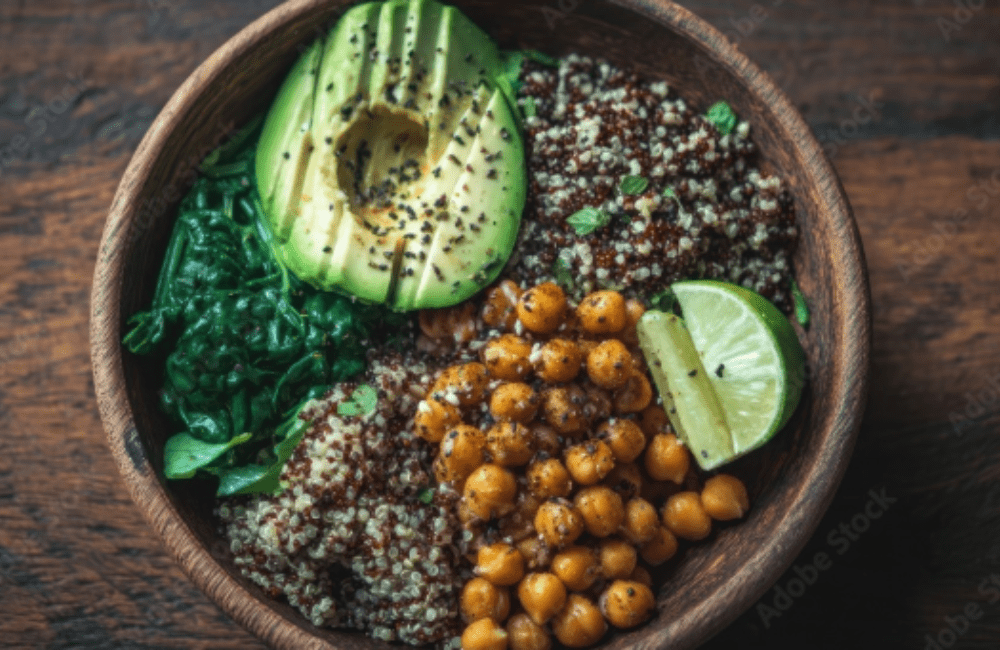
What “Detox” Really Means (and What It Doesn’t)
Detoxification refers to the body’s ability to transform, neutralize, and eliminate substances it no longer needs, including:
- Metabolic byproducts such as hormones
- Environmental chemicals
- Alcohol metabolites
- Medications
- Normal cellular waste generated through daily metabolism
This process is continuous. It does not start on a Monday, require a reset button, or depend on removing entire food groups.
Whole foods provide the macronutrients, micronutrients, and phytochemicals required for detoxification. In some cases, targeted supplementation may be appropriate for individuals with documented deficiencies or specific genetic variations affecting detox pathways, but supplementation is not a substitute for adequate intake.
Detox is not something you do.
It is something your body is already doing.
The Liver: Central to Detoxification
The liver is the primary organ responsible for detoxification. It processes compounds through two tightly regulated phases.
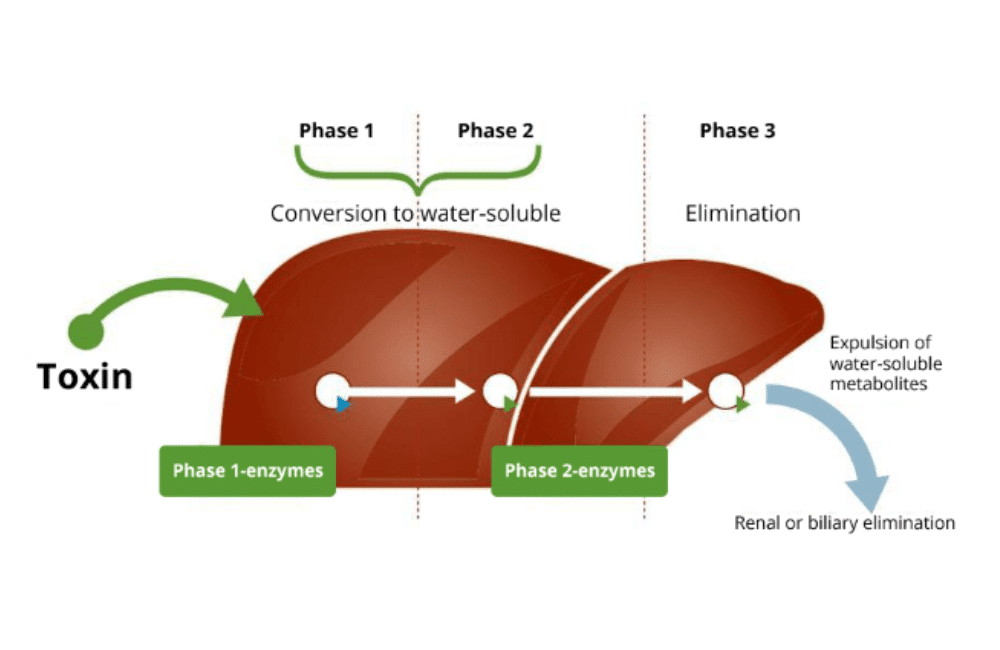
Phase I: Transformation
Phase I reactions are carried out largely by cytochrome P450 enzymes. These enzymes convert fat-soluble compounds into intermediate metabolites. These intermediates are often more chemically reactive than the original compound. This is a normal and necessary step, but it creates increased demand for downstream processing. Without adequate nutritional support, Phase I activity can outpace Phase II, contributing to symptom burden rather than efficient clearance.
Phase II: Conjugation and Elimination
Phase II reactions bind these intermediate compounds to specific molecules, such as amino acids, sulfur groups, or antioxidants, making them water-soluble and ready for excretion through bile or urine. Phase II detoxification is nutrient-dependent. It requires sufficient protein, specific amino acids, B vitamins, and minerals to function properly. When intake is inadequate, clearance slows. Compounds that are not effectively conjugated may circulate longer or be reabsorbed.
Some symptoms that may reflect increased metabolic or detoxification demand include:
- Headaches
- Hormonal acne
- Disproportionate PMS symptoms
- Chemical sensitivities
- Fatigue after alcohol intake
These symptoms are nonspecific and have multiple possible causes. They are not diagnostic of liver dysfunction. However, they may signal that the body is under stress and could benefit from improved nutritional support.
Feeling “off” is not a sign that you need to detox harder.
It is often a sign that your body needs to be fed.
“Phase 1 creates waste. Phase 2 decides whether it leaves.”
The Gut: Where Detox Completes (or Circulates)
Once the liver packages compounds into bile, they are released into the digestive tract for elimination.
This step is critical. If elimination does not occur efficiently, compounds can be reabsorbed into circulation through the gut.
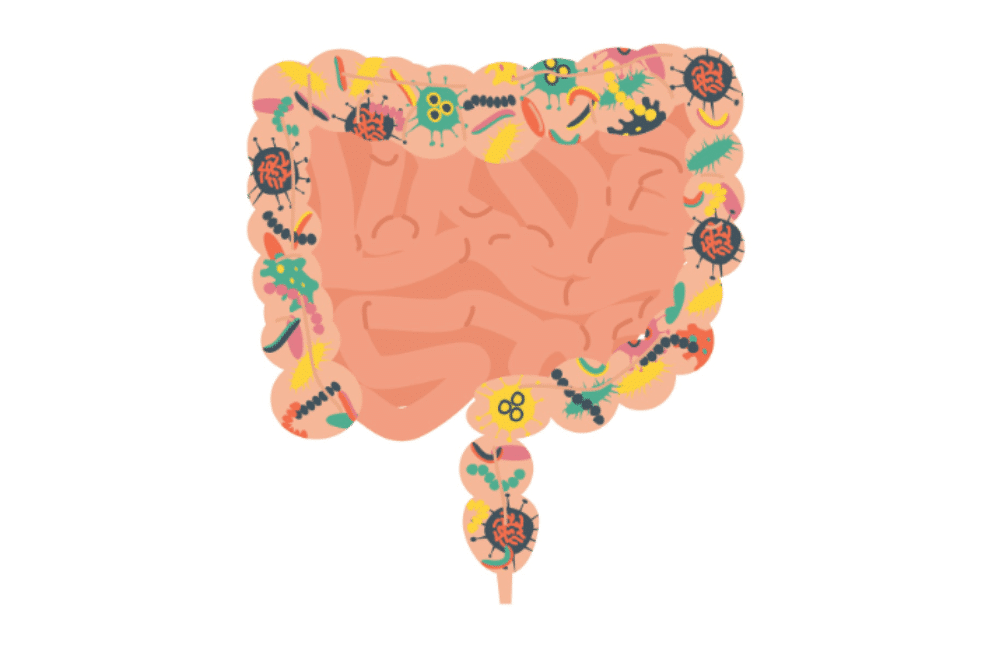
Factors that interfere with elimination include:
- Chronic constipation
- Inadequate fiber intake
- Under-eating
- Irregular meal patterns
When elimination slows:
- Estrogen may be recycled
- Metabolic waste remains in circulation longer
- Symptoms persist
Regular, comfortable bowel movements are not optional.
They are a core requirement for effective detoxification.
“If waste doesn’t leave through the gut, it doesn’t magically disappear.”
The Supporting Systems: Kidneys, Skin, Lungs, and Lymph
Detoxification is a systems-level process.
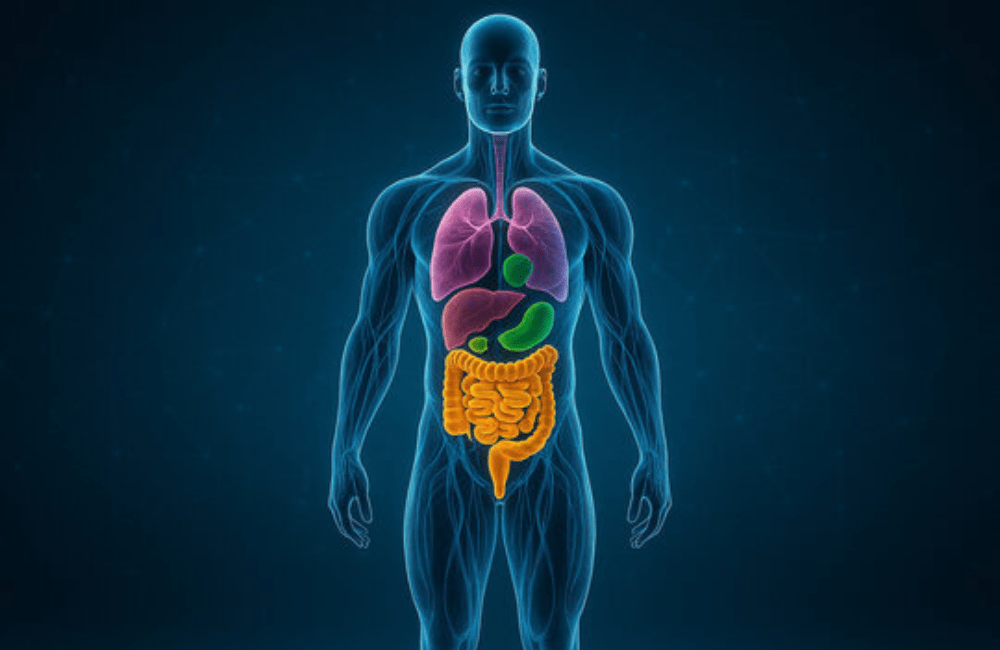
- Kidneys filter blood and excrete waste through urine. Adequate hydration is essential for this process.
- Skin eliminates small amounts of waste through sweat. Movement plays a larger role here than sauna use.
- Lungs remove volatile compounds through respiration.
- The lymphatic system transports metabolic waste but has no pump of its own. It relies entirely on muscle contraction and movement.
When hydration is inadequate, movement is limited, intake is insufficient, and stress is high, detoxification efficiency declines.
This is not a failure of discipline.
It is a predictable physiological response.
“Your lymphatic system doesn’t have a pump. It relies on you moving your body.”
Why You Can Feel Worse on a “Detox”
Many people report headaches, fatigue, dizziness, or irritability during restrictive detox programs. These symptoms are more consistent with hypoglycemia, electrolyte imbalance, and stress hormone activation than with toxin mobilization.
Detoxification requires energy and nutrients. When intake drops too low, the body shifts into conservation mode, prioritizing survival over clearance.
Why Restriction Backfires
Most detox programs fail because they unintentionally impair the very pathways they claim to support.

Common issues include:
- Inadequate protein, limiting Phase II conjugation
- Insufficient dietary fat, reducing bile production and flow
- Elimination of entire food groups, increasing stress hormones
- Caloric intake below metabolic needs, signaling physiological threat
Moderate fat intake supports normal bile acid synthesis and turnover. Research shows that both extremely low-fat and extremely high-fat diets impair bile production compared to moderate intake.
While some controlled research suggests that short-term, moderate caloric restriction may upregulate certain antioxidant pathways, these findings do not translate to commercial detox programs or prolonged under-eating in real life. Outside of controlled conditions, restriction consistently increases physiological stress and impairs detox capacity.
Detoxification is an energy- and nutrient-dependent process.
When energy intake falls below metabolic needs, clearance slows.
“Restriction may look productive, but biologically, it reads as stress.”
The Gentle Reset: Supporting Detox Without Restriction
A functional reset supports detoxification by meeting the body’s basic physiological needs.
1. Eat Enough
Adequate calories, complete protein (approximately 0.8–1.2 g/kg body weight), essential fatty acids, and micronutrients are required for detox enzyme function. This means regular, balanced meals.
Key principles:
- Include protein at each meal
- Include dietary fat to support bile flow
- Avoid skipping meals
- Support Phase II pathways with nutrients such as sulfur-containing amino acids, glutathione precursors, B vitamins, magnesium, zinc, and selenium
2. Build the Plate for Phase II
Foods that support detoxification include:
- Sulfur-rich foods: garlic, onions, eggs, cruciferous vegetables
- Protein sources: poultry, fish, tofu, legumes
- Antioxidant-rich foods: berries, herbs, leafy greens
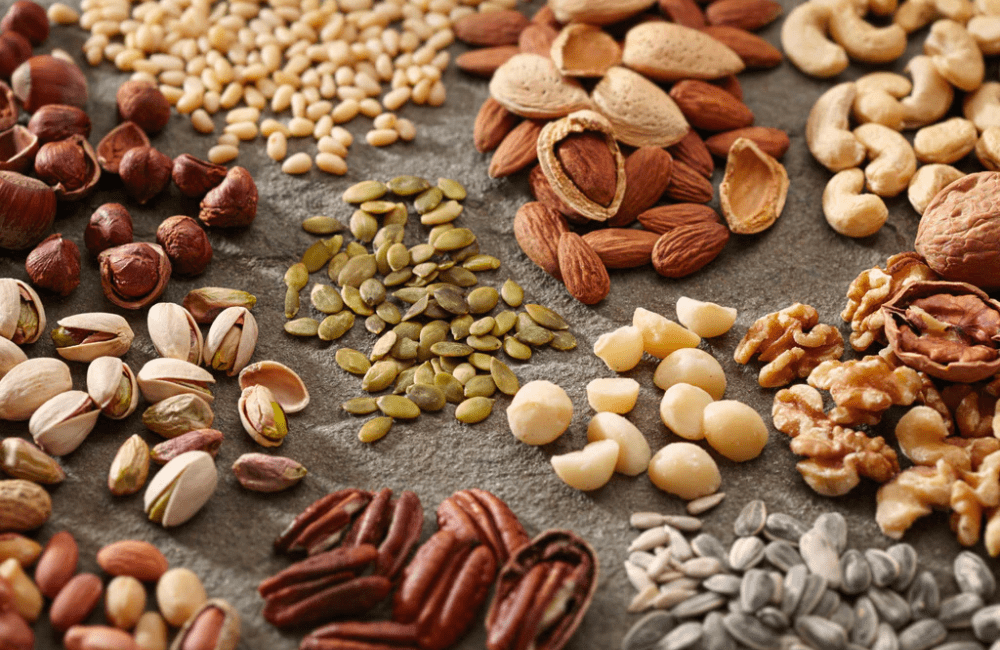
- Mineral-rich foods: nuts, seeds, whole grains
Cruciferous vegetables contain glucosinolates that support Phase II enzyme activity. Allium vegetables provide organosulfur compounds. Polyphenols found in green tea and spices such as turmeric have demonstrated supportive effects in clinical research.
3. Support Elimination Daily
Effective detoxification depends on regular elimination:
- Fiber from whole foods
- Adequate hydration (generally indicated by pale yellow urine)
- Gentle movement after meals
- Consistent eating rhythms
Dietary fiber influences stool bulk, microbial metabolism, and bile acid binding, all of which support elimination.
4. Regulate the Nervous System
Chronic stress diverts resources away from digestion and detoxification.
Supportive practices include:
- Eating slowly
- Deep breathing
- Daily movement
- Adequate sleep
These are not lifestyle extras. They are physiological inputs.
5. Reduce Load Without Obsession
This is not about perfection. Reducing unnecessary burden may include:
- Avoiding stacked stressors such as alcohol, ultra-processed foods, and sleep deprivation
- Making realistic changes rather than extreme ones
Detox works best when the body feels fed, safe, and regulated.
A Reset That Actually Resets
A supportive reset should leave you feeling:
- More stable
- More energized
- Less reactive
- More attuned to hunger and fullness
Not dizzy, irritable, depleted, or afraid to eat.
If a detox makes normal eating feel unsafe afterward, that is not healing.
That is stress with better branding.

Bottom Line
Clinical and mechanistic evidence shows that your body already knows how to detox.
Your role is not to override this system.
It is to support it with adequate nutrition, energy, and regulation.
No cleanses.
No restriction.
No drama.
Just biology doing what it does best.
“Detoxification is not a cleanse ~ it’s a constant, coordinated biological process.”
MEDICAL DISCLAIMER
The information provided on this blog is for educational and informational purposes only and is not intended as a substitute for medical advice, diagnosis, or treatment. Always consult with a qualified healthcare provider, such as your physician, pediatrician, or a registered dietitian, before making any changes to your or your child’s diet, health routine, or treatment plan.
While we are a medical practice specializing in integrative and functional nutrition, the content shared here reflects general knowledge and holistic guidance, and may not be appropriate for every individual. Reliance on any information provided on this site is solely at your own risk.
Ready for a reset that doesn’t involve restriction or cleanses?
Our team of integrative dietitians helps you support detox pathways, digestion, and hormones in a way that’s sustainable and evidence-based.
Start with a consult call and we’ll map out the next best step for your body.
REFERENCES
Parke DV. Nutritional requirements for detoxication of environmental chemicals. Food Additives and Contaminants. 1991;8(3):381–396. doi:10.1080/02652039109373987
American Cancer Society. Detoxes and cleanses. https://www.cancer.org/healthy/diet-and-physical-activity/should-i-try-a-detox-or-cleanse.html
Nutrients & Phytochemicals Supporting Phase II Detoxification
Glutathione and Precursors
Minich DM, Brown BI. A review of dietary (phyto)nutrients for glutathione support. Nutrients. 2019;11(9):2073. doi:10.3390/nu11092073
Smith TK. Dietary modulation of the glutathione detoxification pathway and the potential for altered xenobiotic metabolism. Advances in Experimental Medicine and Biology. 1991;289:165–169. doi:10.1007/978-1-4899-2626-5_14
Cruciferous Vegetables & Isothiocyanates
Abdull Razis AF, Konsue N, Ioannides C. Isothiocyanates and xenobiotic detoxification. Molecular Nutrition & Food Research. 2018;62(18):e1700916.
doi:10.1002/mnfr.201700916
Curcumin and Polyphenols
Kumar H, Dhalaria R, Kimta N, et al. Curcumin: A potential detoxifier against chemical and natural toxicants. Phytotherapy Research. 2025;39(3):1494–1530.
doi:10.1002/ptr.8442
Qin S, Hou DX. Multiple regulations of the Keap1/Nrf2 system by dietary phytochemicals. Molecular Nutrition & Food Research. 2016;60(8):1731–1755.
doi:10.1002/mnfr.201501017
Clinical & Translational Nutrition Research
Panda C, Komarnytsky S, Fleming MN, et al. Guided metabolic detoxification program supports Phase II detoxification enzymes and antioxidant balance in healthy participants. Nutrients. 2023;15(9):2209. doi:10.3390/nu15092209
Cline JC. Nutritional aspects of detoxification in clinical practice. Alternative Therapies in Health and Medicine. 2015;21(3):54–62.
Hepatoprotective and Liver Support Research
Służały P, Paśko P, Galanty A. Natural products as hepatoprotective agents: A comprehensive review of clinical trials. Plants. 2024;13(14):1985. doi:10.3390/plants13141985
Maćków M, Dziubyna T, Jamer T, et al. The role of dietary ingredients and herbs in the prevention of non-communicable chronic liver disease. Nutrients. 2024;16(20):3505. doi:10.3390/nu16203505
Chung RT. Detoxification effects of phytonutrients against environmental toxicants and clinical experience on practical applications. Environmental Science and Pollution Research International. 2017;24(10):8946–8956. doi:10.1007/s11356-015-5263-3
Bjørklund G, Cruz-Martins N, Goh BH, et al. Medicinal plant-derived phytochemicals in detoxification. Current Pharmaceutical Design. 2024;30(13):988–1015. doi:10.2174/1381612829666230809094242