

If you have ever searched for supplements for PMS, irregular periods, breast tenderness, fertility, or “hormone balance,” there is a good chance you have encountered Vitex. Also called chasteberry or chaste tree, Vitex agnus-castus is one of the better-known herbal supplements for menstrual health. It has been used for centuries and is now found in everything from PMS supplements to fertility blends.
But historical use and clever marketing are not equivalent to evidence.
So, does Vitex actually work?
Maybe, for the right person and the right problem. Vitex has more research behind it than many supplements marketed for women’s hormones, particularly for PMS and cyclical breast tenderness. But it is not a universal “hormone balancer,” and there are plenty of situations where taking it would not make sense.

What Is Vitex?
Vitex is an herbal extract made from the fruit of the Vitex agnus-castus plant, a shrub native to the Mediterranean and parts of Asia.
Today, you’ll most commonly see it marketed for:
- Premenstrual syndrome (PMS)
- Breast tenderness before your period
- Irregular menstrual cycles
- “Low progesterone”
- Acne
- Fertility
- Premenstrual dysphoric disorder (PMDD)
There is some evidence behind a few of these uses. Others require a much bigger asterisk.
“Vitex has more evidence behind it than many popular “hormone-balancing” supplements. That doesn’t mean everyone with PMS needs it.”
How Does Vitex Actually Work?
Let’s clear up one of the biggest misconceptions first:
Vitex does not contain progesterone. Saying that it simply “boosts progesterone” is an oversimplification.
Vitex appears to interact with dopamine receptors in the pituitary gland, which can reduce the release of a hormone called prolactin.
You may associate prolactin with breastfeeding, but everyone has some circulating prolactin. When prolactin is elevated, however, it can interfere with the hormonal signals involved in ovulation and the menstrual cycle.
In some people, reducing elevated prolactin may help restore more normal hormonal signaling and support progesterone production after ovulation.
There is clinical evidence supporting this mechanism. One randomized controlled trial in women with subtle elevations in prolactin found that Vitex reduced prolactin response, normalized a shortened second half of the menstrual cycle, and increased mid-cycle progesterone levels.
That is quite different from Vitex simply adding progesterone to your body.
“Vitex is not progesterone. Its potential effects on progesterone happen indirectly through hormonal signaling.”

This is important in determining appropriateness for you. If your prolactin and menstrual cycle are completely normal, taking Vitex because someone on social media told you that your PMS means you have “low progesterone” may not accomplish what you think it will.
Does Vitex Actually Help PMS?
Let’s break down what the current evidence tells us.
Multiple randomized controlled trials have found improvements in PMS symptoms with Vitex compared with placebo. Studies have reported improvements in symptoms including:
- Irritability and mood changes
- Breast tenderness
- Bloating
- Headaches
- Other physical PMS symptoms
A 2019 meta-analysis looked specifically at higher-quality, double-blind randomized controlled trials using well-characterized Vitex extracts. Women taking Vitex were more likely to experience improvement or remission of PMS symptoms than those taking placebo.
Sounds fantastic, right?
There is a catch.
Only three of the 21 potentially relevant studies met the researchers’ strict criteria. Other systematic reviews have also found encouraging results but substantial differences between studies, including the Vitex products used, doses, research methods, and ways symptoms were measured.
That makes the evidence harder to interpret and probably makes Vitex look somewhat more impressive on paper than it really is.
The American College of Obstetricians and Gynecologists (ACOG) reached a similar conclusion in its clinical guideline on premenstrual disorders. ACOG acknowledges that clinical trials have associated Vitex with improvements in premenstrual symptoms, but considers the evidence insufficient to make a formal recommendation because studies have used different formulations and doses.
The Bottom Line on PMS
Vitex may improve PMS symptoms for some people, and it has considerably more clinical research behind it than many herbal products marketed for menstrual health. There is a legitimate signal of benefit.
What About Breast Tenderness?
This may actually be one of the more compelling reasons to consider Vitex.
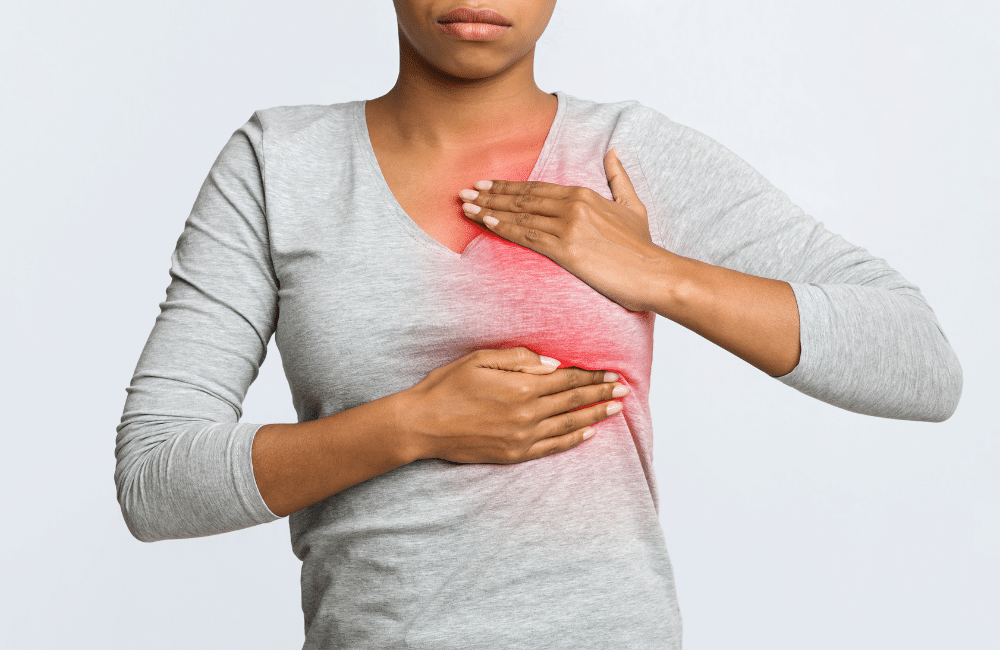
Cyclical mastalgia is breast pain or tenderness that predictably occurs around the menstrual cycle, usually worsening before your period.
Vitex has been studied specifically for cyclical breast pain, with research showing improvement compared with placebo. Its potential effects on prolactin may also help explain why breast tenderness responds in some people.
If breast pain is new, persistent, severe, associated with a lump or nipple changes, or does not follow a predictable menstrual pattern, don’t assume it is PMS and start experimenting with supplements. Get it evaluated.
What About PMDD?
PMS and premenstrual dysphoric disorder (PMDD) are not interchangeable.
PMDD involves significant mood and/or behavioral symptoms during the premenstrual phase that interfere with daily functioning, relationships, work, or school.
Vitex has been studied for PMDD, but the evidence is much less convincing than the evidence supporting established PMDD treatments. In one study comparing Vitex with the SSRI fluoxetine, fluoxetine performed better for psychological symptoms.
If your menstrual cycle is associated with severe depression, anxiety, irritability, hopelessness, or major disruption to your life, this deserves appropriate assessment and treatment.
PMDD is not something you should try to supplement your way through.
Can Vitex Increase Progesterone?
This is probably one of the most common reasons people encounter Vitex online.
Technically, Vitex may increase progesterone in certain circumstances, but context matters.
If elevated prolactin is interfering with ovulation or shortening the luteal phase, reducing prolactin could theoretically allow more normal progesterone production after ovulation. This effect has also been demonstrated in clinical research involving women with latent hyperprolactinemia.
That does not mean:
PMS = low progesterone = take Vitex.
Human hormones are considerably more complicated than that.
If there is a legitimate concern about abnormal prolactin, ovulation, menstrual irregularity, or fertility, it makes more sense to determine what is actually happening than to blindly add a supplement intended to manipulate that system.
Can Vitex Help You Get Pregnant?
Vitex is frequently included in fertility supplements because of its potential effects on prolactin, ovulation, and luteal-phase hormone production.
That gives us a plausible mechanism for why it might help in specific circumstances.
It does not give us strong evidence that Vitex generally improves fertility.
Infertility can involve ovulatory disorders, PCOS, thyroid dysfunction, endometriosis, tubal factors, diminished ovarian reserve, sperm factors, age-related changes, and many other issues. Sometimes multiple factors are involved.
Taking Vitex because the internet diagnosed you with “low progesterone” is not a substitute for figuring out what is actually happening.
And if you’re undergoing IVF or another form of assisted reproductive treatment, this is absolutely a supplement your reproductive endocrinologist should know about. Vitex affects hormonal signaling, and we do not have adequate evidence supporting its use alongside fertility medications.
Before You Take Vitex for an Irregular Period…
An irregular menstrual cycle is a symptom, not a diagnosis.
Irregular or missing periods can be associated with:
- PCOS
- Thyroid disorders
- Elevated prolactin
- Pregnancy
- Perimenopause
- Under-fueling or low energy availability
- Significant changes in exercise
- Stress
- Certain medications
- Other medical conditions
Vitex may make sense in certain situations. But automatically reaching for a supplement that affects hormonal signaling can also muddy the picture when you haven’t established why your cycle is irregular in the first place.
This is one of those times when testing before treating can be considerably more useful than guessing.
How Much Vitex Should You Take?
One of the best-studied Vitex products is a standardized extract called Ze 440.
A randomized dose-finding trial compared 8 mg, 20 mg, and 30 mg daily for PMS. The 20 mg dose performed significantly better than placebo and 8 mg, while increasing the dose to 30 mg did not provide additional benefit.
That does not mean every bottle labeled “Vitex 20 mg” is equivalent. This is where things can get surprisingly complicated.
Different supplements may contain standardized extracts, concentrated extracts, powdered whole fruit, tinctures, or proprietary blends. Twenty milligrams of one extract may not be equivalent to 20 milligrams of another preparation.
Herbal supplements are annoying this way: milligrams alone don’t necessarily tell you whether two products are equivalent. Product quality matters.
Most clinical trials have also used Vitex every day for several menstrual cycles, rather than taking it occasionally when PMS symptoms appear. It isn’t really a “take this Tuesday and feel better Wednesday” kind of supplement.
If you are going to trial Vitex, using a well-characterized product at an evidence-supported dose and giving it adequate time makes far more sense than randomly choosing whatever bottle has the prettiest hormone claims.

Is Vitex Safe?
Vitex is generally well tolerated, and reported side effects are usually mild and reversible.
Possible side effects include:
- Nausea or other digestive symptoms
- Headache
- Dizziness
- Acne
- Changes in menstrual bleeding or cycle length
- Rash or itching
- Fatigue
Because Vitex affects dopamine and reproductive hormone signaling, there are also some situations where more caution is warranted.
Vitex is generally not recommended during pregnancy, and there is not adequate evidence supporting its use during breastfeeding.
It may also theoretically interact with medications that affect dopamine, including some antipsychotic medications and metoclopramide.
There are also theoretical concerns about combining Vitex with hormonal medications, although documented interactions are limited. If you take hormonal contraception, menopausal hormone therapy, fertility medications, or medications affecting dopamine, this isn’t a supplement I would casually add without discussing it with your healthcare team.
So, Should You Take Vitex?
Vitex isn’t nonsense, nor is it a universal hormone-balancing supplement.
There is reasonable evidence that certain standardized Vitex extracts can improve PMS symptoms for some people, and cyclical breast tenderness may be one of its more useful applications. Its effects on dopamine and prolactin also provide a plausible mechanism for helping certain menstrual-cycle problems.
What we don’t have is good evidence that everyone with PMS, acne, irregular periods, infertility, “estrogen dominance,” or supposedly low progesterone needs Vitex.
“Supplements work best when we know what we’re trying to accomplish. Vitex is no exception.”
If you’re considering Vitex because your menstrual symptoms are interfering with your quality of life, nutrition and supplements can be part of the conversation. But they should be used in the context of your symptoms, medications, medical history, menstrual cycle, and goals rather than as another generic attempt to “balance your hormones.”
At Whole Lifecycle Nutrition, our dietitians provide evidence-based nutrition and supplement guidance for PMS, PMDD, PCOS/PMOS, perimenopause, fertility, and other women’s health concerns. We can help you sort through what may actually be useful, what deserves further evaluation, and which supplements probably don’t deserve your money.
Schedule a consultation with Whole Lifecycle Nutrition →
Frequently Asked Questions
How long does Vitex take to work?
Most clinical trials have evaluated Vitex over approximately three menstrual cycles. It should not be expected to substantially change PMS symptoms within a few days.
Does Vitex increase progesterone?
Not directly. Vitex may reduce prolactin through its effects on dopamine receptors. In certain people, this may support more normal ovulation and progesterone production during the luteal phase.
Can I take Vitex while trying to conceive?
This depends on why you are taking it. Vitex has been studied for certain menstrual and hormonal abnormalities, but evidence that it generally improves fertility is limited. If you’re experiencing infertility or undergoing fertility treatment, discuss it with your reproductive healthcare team rather than adding it independently.
Can I take Vitex with birth control?
Potential interactions with hormonal medications are not well established. Because Vitex can influence reproductive hormone signaling, discuss its use with your healthcare provider or pharmacist if you use hormonal contraception.
Is Vitex the same thing as chasteberry?
Yes. Vitex, chasteberry, chaste tree, and Vitex agnus-castus generally refer to the same plant.
References
- Csupor D, et al. Vitex agnus-castus in premenstrual syndrome: a meta-analysis of double-blind randomised controlled trials. Complement Ther Med. 2019.
- Verkaik S, et al. The treatment of premenstrual syndrome with Vitex agnus-castus: a systematic review and meta-analysis. Am J Obstet Gynecol. 2017.
- van Die MD, et al. Vitex agnus-castus extracts for female reproductive disorders: a systematic review of clinical trials. Planta Med. 2013.
- Schellenberg R, et al. Dose-dependent efficacy of the Vitex agnus-castus extract Ze 440 in patients suffering from premenstrual syndrome. Phytomedicine. 2012.
- Wuttke W, et al. Chaste tree (Vitex agnus-castus): pharmacology and clinical indications. Phytomedicine. 2003.
- ACOG. Management of Premenstrual Disorders: Clinical Practice Guideline No. 7. Obstet Gynecol. 2023.
- Daniele C, et al. Vitex agnus-castus: a systematic review of adverse events. Drug Saf. 2005.
